
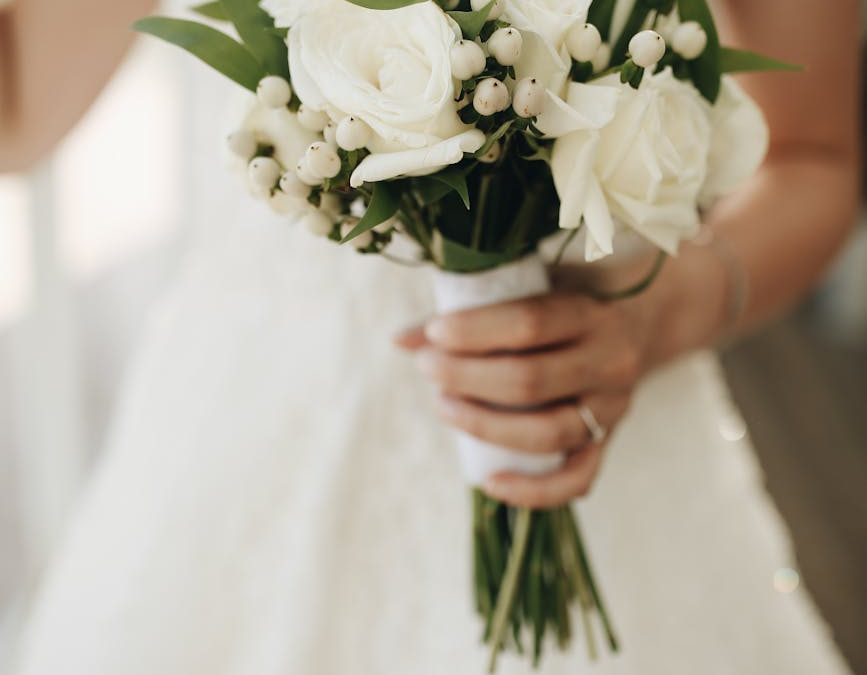
The Floral Budget Reality Check Most Couples Need Before Touring Florists
Wedding flowers are one of the most emotionally significant and budget-sensitive categories in any wedding. They set the atmosphere of the ceremony, define the visual character of the reception, and appear in nearly every photograph from your day. They are also one of the most consistently surprising line items in a wedding budget — because what flowers actually cost and what couples assume they’ll cost are often significantly different numbers.
According to The Knot’s 2025 Real Weddings Study, surveying 10,474 couples married in 2025, the national average cost of wedding flowers was $2,723. This figure bundles bridal bouquet, wedding party flowers, ceremony arrangements, and reception centerpieces. But as florists consistently note, $2,723 covers personal flowers, a very simple ceremony statement piece, and simple centerpieces — nothing more. Couples who want the lush, layered floral aesthetic that dominates wedding inspiration boards are looking at a meaningfully different number.
In 2026, rising labor costs and flower import pricing have pushed average wedding floral budgets to between $2,500 and $7,000 or more depending on the scale of the event, per Something Borrowed Blooms’ 2026 industry guide. For larger weddings with extensive reception centerpieces and ceremony installations, $10,000 to $25,000 is not uncommon. Understanding where your specific vision falls on that range — before you start touring florists and falling in love with proposals you can’t afford — is what this guide is for.
Why Wedding Flowers Cost What They Do in 2026
Flower pricing is not arbitrary. It is driven by a specific set of cost factors that most brides don’t know about until they receive a quote that surprises them.
Labor is the dominant cost driver — not the flowers themselves.
The most expensive element of professional floral design is skilled labor. A florist’s quote covers not just the cost of flowers and supplies, but the design consultation, sourcing, conditioning and processing each stem, building every arrangement, transporting everything to the venue, setting it up on the day, and breaking it down afterward. A bridal bouquet that contains $40 in wholesale flowers might retail for $200 to $350 — because the skilled labor to design, source, and construct it is the majority of the cost.
80% of cut flowers sold in the U.S. are imported from Colombia and Ecuador, per Rinlong Flower’s December 2025 analysis of the 2026 floral supply chain. This means wedding flower budgets are directly affected by international shipping costs, fuel prices, and import tariffs. In 2026, proposed tariff increases of 10 to 20% on imported goods are creating upward pricing pressure across the floral industry that wasn’t present in previous years.
Seasonal availability determines which flowers are priced reasonably and which aren’t.
Peonies in January, garden roses in November, and many specialty blooms in their off-season require sourcing from international supply chains, raising costs significantly. The same arrangement built with in-season, locally available flowers costs 20 to 40% less.
Scale multiplies costs arithmetically.
You may only have one ceremony aisle, but you have 15, 20, or 30 reception tables — and each one needs centerpieces. The reception typically consumes 40 to 50% of a floral budget simply because of the math of multiple tables multiplied by per-arrangement cost.
The Average Cost of Each Floral Element
Here is a breakdown of typical per-element pricing in 2026, cross-referenced across multiple current sources including The Knot, Joy, Fash data from 10,000+ vendors, and florist expert commentary.
Personal flowers:
Bridal bouquet: $100 to $350 for most professionally arranged bouquets. The range breaks down into tiers — standard seasonal blooms like roses run $100 to $250; premium flowers or high-complexity arrangements run $250 to $350; luxury large cascading bouquets with peonies, orchids, or garden roses can run $350 to $500+.
Bridesmaid bouquets: $50 to $110 each on average. Per Joy’s analysis, these are typically smaller and less elaborate than the bridal bouquet. For a wedding party of four bridesmaids, budget $200 to $440.
Boutonnieres: $10 to $30 each. For a groom plus four groomsmen, budget $50 to $150.
Corsages: $25 to $50 each for wrist corsages for mothers and grandmothers.
Flower girl petals or basket: $20 to $50.
Ceremony flowers:
Floral arch or chuppah: $200 to $1,000 for moderately sized designs; $1,500 to $5,000 for fully covered installations. Fully covered floral arches require thousands of stems plus labor for structural support — the cost reflects both materials and significant installation complexity.
Aisle décor (pew markers, chair posies): $30 to $60 per marker. For 20 rows of pew markers, budget $600 to $1,200.
Ground arrangements and aisle meadows: $80 to $150 per piece. These line the aisle and can be repurposed at the reception.
Altar flowers: $60 to $450 depending on arrangement size.
Reception flowers:
Centerpieces: The single most budget-significant line item because quantity multiplies cost directly.
- Low centerpieces: $75 to $150 each
- Medium arrangements: $150 to $250 each
- Tall or elaborate centerpieces: $250 to $500+ each
For a 20-table reception: low centerpieces run $1,500 to $3,000; medium run $3,000 to $5,000; tall or elaborate run $5,000 to $10,000+.
Additional reception florals: Sweetheart table: $150 to $500. Bar and welcome table arrangements: $75 to $250 each. Floral installation or backdrop: $500 to $3,000+ depending on scale.
Real Budget Scenarios: What Different Amounts Actually Buy
These scenarios are based on current florist guidance, combining data from Flora Good Times (Hudson Valley florists), The Knot’s 2025 study, and Whole Blossoms’ 2026 budget guide.
$1,500 to $2,500: Essentials only
At this level, you can cover personal flowers (bridal bouquet, small bridesmaid bouquets, boutonnieres) and simple reception centerpieces — probably low greenery arrangements or bud vase clusters. Ceremony flowers will be minimal: a simple altar arrangement or repurposed personal flowers. This is clean and intentional but leaves no room for ceremony installations, dramatic centerpieces, or elaborate details. It works beautifully for intimate weddings and couples who genuinely prefer minimal floral design.
$2,500 to $5,000: Standard coverage
This range — which brackets The Knot’s $2,723 average — provides complete personal flowers, a simple ceremony statement piece, and medium centerpieces for a mid-size reception. It doesn’t include a fully covered arch, elaborate reception installations, or premium flower varieties. This is the range where most couples need to make strategic choices: where do flowers matter most to you, and where can you simplify?
$5,000 to $10,000: Full-scale celebration
For a 100-person wedding, a $5,000 floral budget is $50 per head — enough for complete personal flowers, a meaningful ceremony installation, and strong reception florals at medium-tier centerpieces. Flora Good Times’ November 2025 analysis notes this level gives flexibility to create atmosphere without overextending. You’re making choices rather than compromises.
$10,000 to $25,000: Premium and abundant
Full ceremony installations, lush centerpieces, elaborate reception décor, and premium flower varieties. At $10,000 for 100 guests, you’re at $100 per head. This level allows cascading arches, tall dramatic centerpieces, floral runners, and the kind of abundant aesthetic that dominates high-end wedding photography. A $25K floral budget — $250 per head — delivers near-unlimited options for scale and variety.
Over $25,000:
Grand installations, elaborate floral walls, multiple statement pieces, custom elements, and premium designer florals. Venue-scale transformations. This represents roughly 1% of weddings.
The 8 to 10 Percent Rule — and When It Doesn’t Apply
Most florists and wedding planners recommend allocating 8 to 10% of your total wedding budget to flowers. On a $34,200 average wedding (The Knot’s 2025–2026 data), that’s $2,736 to $3,420. On a $20,000 wedding, it’s $1,600 to $2,000.
This rule works as a starting point but breaks down in two directions:
If flowers are a low priority for you — you genuinely prefer minimalist décor, you’re prioritizing other categories like food and photography, or you’re having a small intimate wedding — you can spend meaningfully less than 8% and still have a beautiful event.
If flowers are a high priority — you want the immersive floral environment you’ve seen in inspiration photos, you’re having a larger wedding with many tables, or you’ve chosen a venue that requires significant floral décor to feel complete — 8 to 10% will fall short, and 15 to 25% of your total budget is a more realistic allocation.
The industry sees a consistent pattern: “Couples aren’t shying away from the day they’ve always wanted; they’re just being more intentional about their trade-offs,” per Zola’s Director of Brand’s comment in the 2026 First Look Report. Flowers are a category where intentionality matters — knowing what you actually want and what you’re willing to simplify is more valuable than a generic percentage.
Geographic Variation: Where You Get Married Affects What You Pay
Wedding flower costs vary significantly by region. Couples who wed in the Mid-Atlantic spent the most on their wedding blooms, with an average cost of $3,457, followed by the Northeast/New England at $2,969 — both above the national average of $2,723, per The Knot 2025 data.
Highest-cost markets: New York City, Washington DC, Boston, San Francisco, Los Angeles. Expect to add 30 to 50% to the national averages in these markets.
Lower-cost markets: Midwest and Southeast cities outside major metros. Couples in these areas often find they can get significantly more for their floral dollar.
Destination wedding premium: Destination wedding flowers averaged $3,000 versus $2,658 for hometown weddings, per The Knot’s data. Shipping flowers or sourcing locally in destination markets both add cost.
How to Save Money on Wedding Flowers Without Sacrificing the Look
These are the strategies florists themselves recommend when couples ask how to get more from their floral budget.
Choose in-season, locally-grown flowers.
Seasonal and locally-grown flowers cost less than imported, out-of-season varieties. Your florist can tell you what’s in season at your wedding’s time and location. Substituting a few premium stems with in-season alternatives while keeping the overall design intact often reduces floral costs 15 to 25% without a visible change in the final look.
Use greenery and foliage as a base.
Greenery-forward arrangements — eucalyptus, ferns, leafy branches, magnolia, olive — cost significantly less per arrangement than arrangements built primarily on blooms. A lush greenery-forward centerpiece with accent flowers can cost 30 to 40% less than an equivalent arrangement built around garden roses or peonies, while looking equally full and intentional.
Repurpose ceremony flowers at the reception.
Ceremony altar flowers, arch installations, and aisle arrangements can often be moved to the reception for use as cocktail hour décor or additional centerpieces. This reuse eliminates the need for duplicate florals at both locations. Ask your florist specifically about repurposing during the design conversation — not all installations travel easily, but many do with planning.
Prioritize the high-impact zones.
Flowers make the biggest visual and photographic impact where people gather and where cameras point: the ceremony backdrop, the sweetheart table, the bar area, and the tables nearest the dance floor. Front-loading floral investment into these areas and simplifying others — using candles, lanterns, or simple greenery at lower-priority tables — stretches the budget further without reducing the overall impression.
Minimize bridesmaid bouquets.
Bridesmaids hold their bouquets for photos during getting-ready and ceremony proceedings, then set them down for the rest of the event. Simplifying bridesmaid bouquets to small hand-tied posies while investing in the bridal bouquet consistently produces the most photographic value per floral dollar.
Consider candles as a complement, not a competitor.
Pillar candles, taper candles, and tea lights create significant atmosphere at very low cost compared to flowers. A table with three simple bud vases and a cluster of candles of varying heights can be as visually effective as a medium centerpiece at a fraction of the cost.
Book your florist early.
Booking wholesale flowers well in advance not only locks in current pricing but also offers better flexibility in flower selection before seasonal shortages occur, per Whole Blossoms’ December 2025 guide. Florists who are fully booked operate with less pricing flexibility; florists with availability in their calendar often have more room to accommodate budget parameters.
Have a direct, specific conversation about your budget.
Communicate your budget and preferences to your wedding florist early on, and they’ll provide cost-effective suggestions, per Becky Rice of Pink Poppy Designs via a 2025 wedding florals cost guide. Most experienced florists have designed within a wide range of budgets and can tell you what your specific dollar amount can realistically achieve — which is more useful information than a mood board full of images you can’t afford.
Questions to Ask Every Florist Before Signing
Before committing to any florist, these questions should have specific, confident answers:
- What is included in this proposal and what is an additional charge? (Delivery, installation, breakdown, rentals, and vases are sometimes separate.)
- Can you show me complete examples — not just highlight photos — from weddings at a similar budget and guest count to mine?
- What flowers are in season at my wedding date, and how does that affect your recommendations?
- Which elements in this proposal are flexible if I need to reduce the budget?
- What is your contingency plan if a specific flower variety is unavailable near the wedding date?
- Can ceremony flowers be repurposed at the reception, and do you handle that on the day?
- What are your delivery, setup, and breakdown charges?
- What is your cancellation and rescheduling policy?
- What deposit is required and when is the balance due?
- Do you require a written contract? (The answer should always be yes.)
The Bottom Line: Know Your Number Before You Fall in Love with a Vision
The most common source of wedding floral stress is falling in love with an aesthetic on Pinterest or Instagram that costs three times what you’ve allocated — and only discovering this when the first florist proposal arrives.
The prevention is simple: establish your floral budget before you look at inspiration images, and then look for florists who can execute beautifully within that range. Most experienced florists design across a wide spectrum of budgets and can guide you toward maximizing visual impact within yours. What they can’t do is deliver a $15,000 aesthetic on a $3,000 budget without significant compromise.
Know your number. Communicate it clearly. Hire a florist who respects and designs within it. That is the formula for wedding flowers that are both beautiful and budget-appropriate — which is the only combination that feels genuinely good on your wedding day.
About the Author
My best friend and I have been doing calligraphy since 2019 and fell in love with the small details that make weddings feel special. We share practical advice to help you create a wedding that truly reflects you.
Last reviewed: May 2026
The Stress-Free Wedding Planning Bundle
A simple, proven system to help you:
✔ Book the right vendors (without regret)
✔ Avoid hidden costs that blow your budget
✔ Create a smooth, stress-free wedding day timeline
👉 Get the Stress-Free Wedding Planning Bundle
WHAT YOU GET
Wedding Vendor Booking Checklist
Know exactly who to book—and how to choose with confidence.
- What to look for
- What to ask
- How to compare vendors
- How to avoid costly mistakes
👉 Get the Wedding Vendor Booking Checklist
Hidden Wedding Costs Guide
Avoid the expenses most couples never see coming.
- Venue and catering surprises
- Hidden vendor fees
- Budget traps that add up fast
👉 Get the Hidden Wedding Costs Guide
Perfect Wedding Day Timeline Guide
Create a day that flows smoothly from start to finish.
- Realistic timelines (not Pinterest fantasy)
- Built-in buffer time
- Ceremony timing options
👉 Get the Perfect Wedding Day Timeline Guide
Are you a wedding vendor?
Looking to book more clients like the ones reading this article?



 English
  Spanish